





Surgeon(Organ Transplantation)
Dr. Kwan, Choon-hyuck-
History
History
-
Interview
Interview
-
QA
-
-
Interview
Interview
-
Interview
Interview
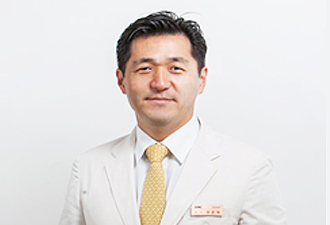
Dreaming of Becoming a World Renowned Laparoscopic Liver Transplantation Specialist
A doctor who shares the joys and sorrow of his patients, Professor Kwon, Choon-hyuck David at the Organ Transplantation Center / Specialist in Liver Transplantation
Professor Kwon, Choon-hyuck David, Samsung Medical Center
Department : Organ Transplantation Center
Education
- Feb.1995 Seoul National University College of Medicine (Bachelor’s)
- Feb.2005 Seoul National University College of Medicine (Master’s)
- Aug.2010 Seoul National University College of Medicine (Doctorate)
Experience
- Mar.1995 ~ Feb.1996 Seoul National University College of Medicine (Internship)
- Mar.1996 ~ Feb.2000 Seoul National University College of Medicine (Residency)
- Mar.2000 ~ Apr.2003 Army Physician
- May2003 ~ Mar.2005 Seoul National University Hospital (General surgeon)
- Apr.2005 ~ Aug.2005 Samsung Medical Center, Sungkyunkwan University School of Medicine (General surgeon)
- Sep.2005 ~ Feb.2007 Samsung Medical Center, Sungkyunkwan University School of Medicine (Fellowship)
- Sep.2005 ~ Present Samsung Medical Center, Sungkyunkwan University School of Medicine (Surgical specialist)
- Mar.2007 ~ Mar.2011 Samsung Medical Center, Sungkyunkwan University School of Medicine (Assistant professor of Surgery)
- Apr.2011 ~ Present Samsung Medical Center, Sungkyunkwan University School of Medicine (Associate professor of Surgery)
- Aug.2011 ~ Nov.2011 Training at Royal Brisbane Hospital, Herston, Queensland / Institut Mutualiste Montsouris, Paris
Research Area
Bioartificial Liver
Interview
What is the value of human life?
According to an old Jewish teaching, a scale is balanced by putting a person’s life on one side and the rest of the world on the other side. Some might be opposed to this idea but it probably means that a person’s life is priceless.
In the medical sector, organ transplantation began based on respect for life. What is organ transplantation? Whether the organ is a liver, kidney, heart, or pancreas, it is a surgery operated to replace an organ that is unrecoverable by existing medical means with a healthy organ that was donated by a brain-dead patient or a living body. In short, it is a ‘resuscitation’ that substitutes death with life by removing a dying organ and transplanting a new organ full of life.
Professor Kwon, was determined to become a surgeon from the first beginning, and chose organ transplantation because he was captivated by the awe of that resuscitation and adopted it as his faith. He is certain that he was born to be a surgeon.
“When I was an intern, interns were in charge of injections and I easily found the veins of patients that were hard to find. My colleagues had a hard time finding the vein but it was easy for me. That was when I realized that ‘I am good with my hands’. Every time I entered the operation room, I became fascinated and full of excitement. I think that I was born to become a surgeon (smiles).”
“There aren’t many organs in our body that are as attractive as the liver. Without a liver, we cannot live. Liver recovers quickly, so even if you cut part of the liver, it returns to its original size soon after. In addition, even if the liver is damaged, a patient can live a new life through a transplant. ”
It certainly is a miracle to see a liver cancer patient who was once facing imminent death and is now recovering after transplantation. A transplant surgeon is a doctor that performs such a miracle.
“Although liver transplant patients show good progress after surgery and the survival rate is high now, when I was a resident, 1 out of 3 patients died during or after liver transplantation. The surgery began in the morning and continued until 2 to 3 am. It was a risky operation.”
In any case, as a result of continuously putting forth efforts to overcome the limits of medical practices despite such difficulties, now the level of the most current medical practices is top notch.
This achievement was made possible through the medical team toiling night and day.
Professor Kwon is focusing on laparoscopy since he believes that laparoscopy will be a widely used surgical method in the future.
“Laparoscopy was first introduced for liver surgeries in 1992 but there was no significant progress for the next 10 years. Around 2005, use of laparoscopy rapidly started to increase.”
According to Professor Kwon, laparoscopic liver surgery is a very challenging operation, technically. The surgeon must be highly skilled to perform the surgery since there are many large blood vessels running through the liver. Therefore, the surgeon must be able to effectively conduct laparoscopy even in case of bleeding in the liver. Otherwise, it can lead to massive hemorrhaging and put the patient’s life at risk. Due to such reasons, there were no significant advancements in laparoscopic liver surgery. Although the problem is being gradually solved since the mid-2000s, it is still a very difficult operation for most surgeons.
After attending short-term laparoscopic surgery training sessions in Australia and France in 2011, Professor Kwon made some improvements to his laparoscopy program that he started in 2008, and began the operation in earnest since 2012.
“There is still a long way to go although laparoscopic surgery is becoming more and more widely operated. In particular, there are only five to ten specialists who could perform laparoscopic liver resection in the world. Therefore, my goal is to universalize a safe, convenient, and easy laparoscopic surgery. It will become a popular surgical method in the next five or ten years. Even now, I am performing laparoscopic surgery on 80% of my patients.”
Professor Kwon added that the medical team at Samsung Medical Center is very open-minded.
“Doctors here at Samsung Medical Center are very open-minded. They would often say to their junior doctors, “Just do what you want! We’ve got your back.” Years ago, I asked Dr. Jae Won Joh in our department if I could try laparoscopic surgery and he simply answered, ‘Yes’ and I really appreciated that.”
According to Professor Kwon, he could only perform laparoscopic surgery for patients who had relatively simple symptoms. Therefore, he could only perform surgery on a limited number of patients
“That is when Dr. Joh suggested me to his patients who needed less intensive laparoscopic surgery by telling them, ‘We have a very good laparoscopic specialist. You should get the surgery from him’. This is something that only happens between doctors at Samsung Medical Center.”
Professor Kwon’s pride in the open-minded medical team at Samsung Medical Center explains why doctors who used to work for a different hospital with less choice in decision-making decided to become part of Samsung Medical Center instead. At the other hospital, junior doctors only could perform the surgery in a way their senior doctors ordered.
“The most notable strength of our hospital is that everyone is willing to support each other to become ‘a pioneer and the best in the sector’.”
Thanks to the support of his colleagues, he is planning to pioneer in a new field again.
“My plan is to begin laparoscopic left lateral sectionectomy for children, then right hepatectomy for adult donors.”
There is one patient who Professor Kwon thinks of whenever he ponders upon a path of becoming a good doctor.
“When I was in my first year of residency, I was in charge of a patient in his late 40s with advanced gastric cancer. He passed away even after surgery and I remember how his wife put her arms around me crying, ‘Our daughters are only five and seven. How could I live without him?’ I went to the restroom and wept, too.”
Ever since then, Professor Kwon thought that he would want to become a doctor who is not famous but takes good care of his patients rather than a famous doctor who does not care for his patients. What could possibly be more comforting for patients than having a doctor who will cry and smile alongside of them? I could see the type of doctor he wants to be from his face.
As we were wrapping up the interview, I asked a question about his ‘future dreams’.
“When I reach 60, I would like to try a different kind of life away from the operation room. I am sure there is a lot that I can contribute to this world based on my experience as a doctor. I could write or I think it would be meaningful to work for a civil organization in Korea, Doctors without Borders, or WHO. When I was in the military, I volunteered to go to East Timor and the Western Sahara and there was a lot to do. I truly agree with the notion that ‘the world is big and there is a lot we can do’. I don’t think that the operation room is the only place for me. I am going to have to start thinking about what I will eventually do from now on.”
I could now see that once you become a doctor, you are forever a doctor and had to nod my head when he said that the world is big and there is a lot we can do for it. I would like to send my active support for Professor Kwon who is building his career as a seasoned doctor who truly cares for his patients.
[Source] Dreaming of Becoming a World Renowned Laparoscopic Liver Transplantation Specialist A doctor who shares the joy and sorrow of patients, Professor Kwon Choon-hyuck David Kwon of the Organ Transplantation Center / Specialist in Liver Transplantation |by Samsung Medical Center